Right-size resources
Set CPU, memory, GPU, environment, and scheduler parameters from reusable defaults, expressions, and runtime rules.

Galaxy resource intelligence
TPV is a Galaxy-integrated Python library for right-sizing job resources and meta-scheduling work across heterogeneous compute destinations using transparent YAML rules.
What TPV does
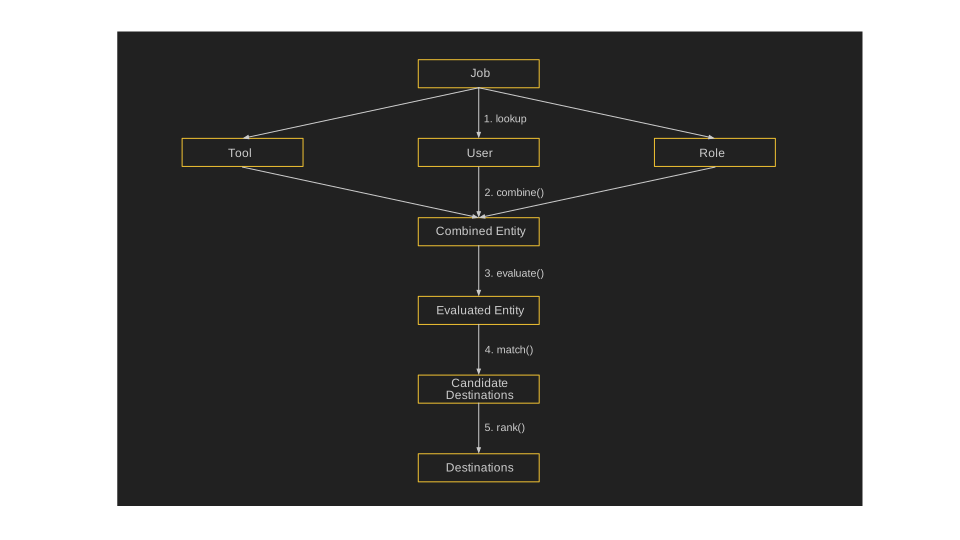
TPV sits at the Galaxy job dispatch layer. It combines tool, user, role, and destination rules to choose suitable resources and an execution target before the backend scheduler takes over.
Set CPU, memory, GPU, environment, and scheduler parameters from reusable defaults, expressions, and runtime rules.
Match jobs to Slurm, Pulsar, local runners, clouds, or other configured destinations based on capacity and policy.
Express routing decisions through YAML entities, inheritance, tags, and auditable Python expressions when more control is needed.
How it is used
Galaxy Australia, Europe, and the United States use TPV concepts in production to reduce over-allocation, route jobs through heterogeneous infrastructure, and make shared compute allocations go further.
Shared resource database
The TPV shared resource database captures empirically derived defaults for common bioinformatics tools. Galaxy sites can import the database, inherit maintained recommendations, and layer local overrides for site-specific destinations, limits, and policies.
Defaults are maintained in version control by the Galaxy community and informed by production use and targeted benchmarking.
Sites can clamp resources to local hardware, add destination-specific parameters, or override any inherited rule.
Better rules can move from one deployment back into the shared database, making production lessons reusable across Galaxy.
Learn more